After having written dozens of op-eds, book reviews, and essays related to the diverse topics that interest me, this is probably the only time an editor has not frustrated my valiant attempts at the use of the term “assuming arguendo.” It is a term used in the law to signal the assumption of certain facts or propositions for the hypothetical application of a line of legal reasoning to test its weaknesses and limits. In common parlance it means “assume for the sake of argument.” Assuming arguendo, for example, that the chupacabra exists, it would be important to write a chupacabra anatomy textbook for veterinarians. But, since chupacabras don’t exist, the person that dedicates his life to that task has wasted a lot of time.
Similarly, assuming arguendo that Alan Dershowitz’s fundamental assumptions about the law, the state, and morality are true, his latest book, The Preventive State: The Challenge of Preventing Serious Harms While Preserving Essential Liberties, is coherent and compelling. Unfortunately, reality demands that we reject many of his fundamental assumptions and conclude that this well-meaning book addressing important emerging issues is misguided and sketches the blueprint of an authoritarian ship of state flying under a pirate flag of civil liberties.
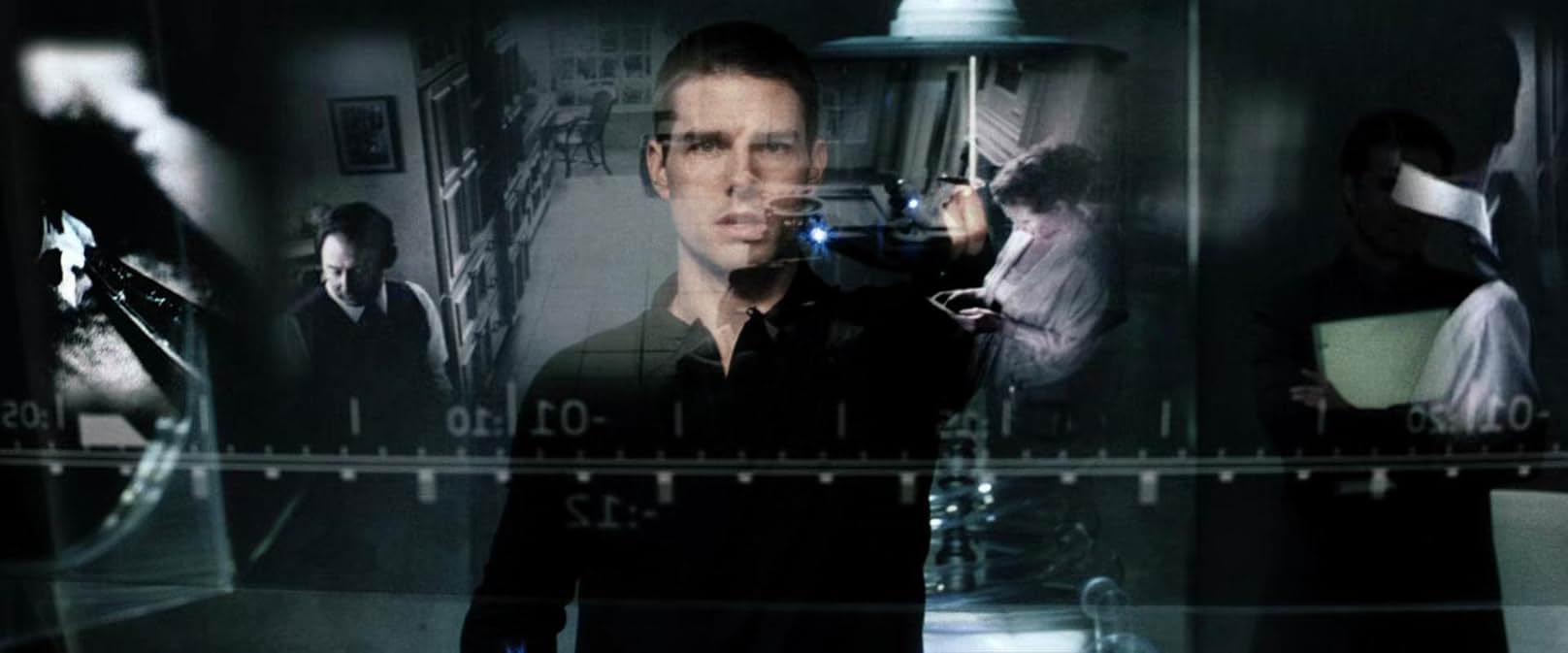
Before turning to Dershowitz’s argument, it might be helpful to understand what he means by “preventive state.” This is not a term original to him but one that has emerged to describe a reorientation of state power and function in light of developing technologies that enable governments to foresee and prevent harm. In Dershowitz’s words, it is the “juxtaposition of … increasing dangers coupled with increasing capabilities by governments” that has made this reorientation possible and desirable to some. Dershowitz never questions the wisdom, feasibility, or even the dangers of the preventive state. He merely says that “it is here to stay.” He seems resigned to the fact that if these new technologies exist, the state will eventually use them, but I am certain that not all citizens are content with resignation regarding a more expansive and intrusive state.
In light of this definition of terms, Dershowitz’s central assumption begins with the observation that there are laws that belong to many different subfields that seek to prevent harm. Criminal law, for example, theoretically deters crime and prevents harm from befalling victims. Other laws, like the USA PATRIOT Act passed in the wake of September 11, 2001, expands the surveillance powers of the state, purportedly to prevent terror attacks. All these very different laws have three things in common. First, they impose or constrain some sort of action. Second, each involves some sort of government prediction about whom or what will be burdened by these impositions or constraints. And finally, all these laws will be imperfect, and the state will make mistakes.
Obviously, Dershowitz expounds each of these features and discusses how they play out in various areas of the law in chapters that are internally coherent. But, as noted above, he makes fundamental assumptions that leave his thesis deeply flawed. These assumptions fall into one of two broad categories—assumptions about the state and assumptions about the law.
Dershowitz’s assumptions about the state are common among many on the political left. A notorious Democratic Party ad from 2012 claimed in a reassuring folksy voice that “government is the only thing that we all belong to,” and former Massachusetts Congressman Barney Frank told us that “government is simply the name we give to the things we choose to do together.” The state, however, was made for man and not man for the state. Government cannot become an end in itself. At its best, government is a passive entity that creates the context for free people to enjoy liberty. It can and has taken many forms, and there is no one form that must survive lest free and open societies collapse.
A collectivist understanding of the state, however, surfaces in Dershowitz’s arguments as he conflates the personal harms that could befall individual citizens (e.g., the harms prevented by the criminal law) and the institutional harms that the government or the state might suffer (e.g., certain aspects of anti-terrorism legislation). Nowhere in the book does he make a distinction between the two. But the distinction is important.
The concept of a harm suggests a right to avoid the harm or to exist or act in a way free from interference. The list of the rights of individual citizens to exist or act in a way free from interference is quite long and imposes upon other citizens obligations to avoid such interference. As a creature of the people, the state enjoys no such rights. The U.S. Constitution does not leave the state powerless in the face of treason, but it does define it precisely: “levying War against [the United States], or adhering to their Enemies, giving them aid or comfort.” The Constitution also requires the uniquely heightened standard of evidence that guarantees that a guilty verdict requires the testimony of two witnesses to the same act or a confession in court.
A survey of the significant body of law on treason is not necessary to point out a few consistent themes. First, especially in the earliest cases, there is no legislative or judicial suggestion that the state is more than a creature of those who constituted it. It is best understood as a political tool for organizing certain civic functions that would be impossible via different institutions. Second, the Constitution is never so rigidly interpreted to require citizens to abandon common sense or their own humanity to avoid the technical definition of treason. Technically, an American soldier who renders medical aid to a wounded soldier of an enemy army would be “giving … aid or comfort” to an enemy of the United States, but the law does not require prosecution in such a case. The law, however, does require the scrupulous avoidance of taking a human life. It acknowledges that at times this can be unintended, so the lesser crime of manslaughter has been created for such instances. Unfortunately, the term “treason” has been so flippantly applied to political or civic acts some people don’t like that it has lost almost all meaning. But the reality is that the law recognizes that there is a difference between individuals and the state, the duties owed to each, and the nature of “harm” that can accrue to each when these duties are breached.
The second set of problematic assumptions that Dershowitz makes is about the law itself. Again, the criminal law provides fertile illustrative ground.
There are several competing theories about the purpose of the criminal law, and Dershowitz appears to hold to the idea that the criminal law exists to vindicate the harm done to victims. Because this is an untenable position, the type of harm Dershowitz wants to avoid is only a secondary aspect of the criminal law. Yes, as a society we want to make sure that citizens are safe in their person, can confidently secure their property against thieves, and so on. But from this theory has sprung quite a few unjust aspects of our system. First, much of the extreme sentencing that we see is the result of victim-impact statements. These are often cathartic for victims and their families, but what moral difference does it make if the now-dead victim of a robbery gone wrong is the young father of twins with a beaming smile who just graduated from the fire academy full of enthusiasm for serving the community, or a mentally ill homeless woman who was fighting another homeless person to keep the few positions she could claim as her own? Neither of these lives should be worth more or less than the other to society.
Second, this theory has given rise to the category known as “victimless crimes.” If smoking pot is itself a victimless crime, why criminalize it? Why criminalize growing it, transporting it, or selling it either? It is this category of laws that gives the clearest picture of the problem with Dershowitz’s theory of the law.
Law professor Gerard Bradley explains: “The central wrong in crime … is not that a criminal causes harm to a specific individual, but that the criminal unfairly usurps liberty to pursue his own interests and plans in a manner contrary to the common boundaries delineated by the law.” The law, in Bradley’s view, represents an agreed upon set of norms for the practice of individual liberty. Through our elected representatives, we’ve decided that some obvious things are criminal—like robbery, murder, and rape. But also that some other things not prescribed by a particular moral theory, like exceeding the speed limit or running a stop sign even under cover of darkness. The crime is not because any of these actions causes particularized harm to a young firefighter or a homeless woman, but because the person who has engaged in criminal behavior has transgressed the boundaries that society has set for the practice of liberty. The state has a responsibility to police those boundaries on behalf of its citizens and not on behalf of any particular citizen who is the secondary beneficiary of the laws that may deter criminal activity that could harm him or her personally.
A final word on Dershowitz’s project—I am sympathetic to the need for wrestling with legal and ethical challenges that accompany the rise of new technologies and sources of information that allow the state to predict and prevent harm that may befall its citizens. It would have been outrageous for government actors to know beforehand and then allow the attacks of September 11, for example. But the evolving nature of technology and other factors that can magnify the scale of harm that might follow certain acts, but might also make avoiding various types of harm possible, requires that we commit ourselves to a certain set of principles from which we can reasonably proceed in defining the boundaries of state action in pursuit of the legitimate ends of government. These principles were the foundational assumptions that underlie the U.S. Constitution, and, assuming arguendo that the American Founders were right, we shouldn’t discard them.