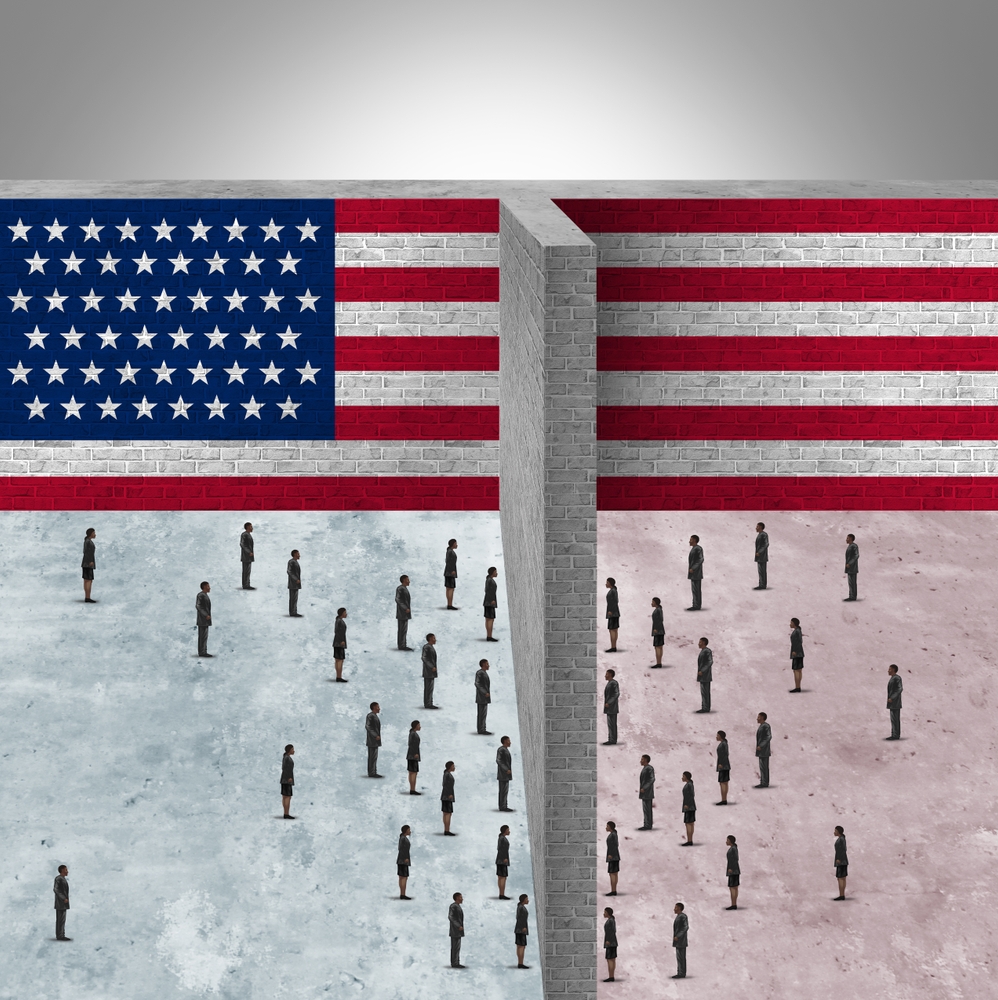
In recent years, Christians across the political spectrum have grown increasingly skeptical of liberalism. Postliberal movements argue that liberal democracy is not merely insufficient but fundamentally hostile to Christianity itself. According to this view, neutrality is a myth, liberal rights are corrosive of virtue, and Christians must choose between faithfulness and liberal politics. Yet this conclusion rests on a crucial confusion: the conflation of liberal political philosophy with liberal political order. While modern liberal theory, especially in its Rawlsian form, rests on foundations incompatible with Christianity, liberal democracy as a polity can still be defended on explicitly Christian grounds.
Nicholas Wolterstorff helpfully distinguishes between liberalism as a theory of justice and liberalism as a form of government. The two are often treated as inseparable, but when the philosophical foundations of “big-L” liberalism, particularly those advanced by John Rawls, are examined closely, deep contradictions with Christian anthropology emerge. But it does not follow that Christians must therefore reject liberal democracy. To do so would be to throw out the political fruits of Christianity’s own moral vision along with the flawed philosophical framing erected in their defense.
The most serious difficulty with Rawlsian liberalism lies in its inheritance of Kantian moral philosophy. Rawls adopts a conception of liberty that treats individuals as autonomous moral legislators, bound primarily by principles they would choose under conditions of abstraction and impartiality. He argues for an unrestricted moral liberty, wherein, “No recognition is given to the legitimate need for each individual’s liberty to be carefully balanced against the liberty of each other individual.” Liberty, on this account, is not ordered toward any particular good but exists as an unrestricted capacity to pursue self-chosen ends. This vision sits uneasily with the Christian understanding of freedom as something rightly ordered, freedom for the good, not merely freedom from constraint.
The Kantian insistence that persons must always be treated as “ends in themselves” illustrates this tension. Christianity affirms the dignity of the human person, and Scripture reminds us that “from Him and through Him and to Him are all things” (Rom. 11:36), and that “in Him we live and move and have our being” (Acts 17:28). Human dignity derives not from self-legislation but from creation in the image of God. Rawls’s attempt to ground justice in a moral framework that effaces this reality results in an anthropology that is at best incomplete and at worst incoherent.
This incoherence becomes especially apparent in Rawls’s commitment to neutrality regarding the good. Seeking a political framework capable of governing a deeply pluralistic society without appealing to contested moral or religious truths, Rawls argues that principles of justice must be justified independently of any comprehensive conception of the good life. Rawls maintains that “a liberal conception of justice is not justified by its being the best moral conception but by its being the most reasonable political conception.” Society, he claims, has no ends in the way individuals or associations do. Yet Rawls simultaneously insists “each person possesses an inviolability founded on justice that even the welfare of society as a whole cannot override.” The result is an unstable paradigm that denies objective moral ends while smuggling one in through the back door—a concept of “justice” that rests on long established Christian foundations. Rawls thus cannot escape making moral claims; he can only obscure their source.
From a Christian perspective, this attempt at neutrality is not merely mistaken but impossible. Justice cannot be detached from a substantive account of the human person, and “fairness,” an often ambiguous concept, cannot serve as the highest moral aim. As Thomas Aquinas recognized, justice has charity as its end. God’s justice is not a blind, mechanical impartiality, but one tempered by mercy. Rawls’s veil of ignorance—a thought experiment that conceives of a social arrangement rooted in absolute disinterestedness—may succeed in preventing self-dealing (were it even possible), but it cannot supply the moral vision required to sustain a genuinely humane political order.
Recognizing the failures of Rawlsian liberalism, however, does not commit Christians to rejecting liberal democracy itself. The error of much contemporary postliberal thought, especially in its calls for renewed moral establishment, is to assume that because neutrality is a myth, the state must therefore enforce a comprehensive moral or religious vision. Scripture indeed teaches that there is no neutrality and that “no man can serve two masters” (Matt. 6:24), but it does not follow that the coercive power of the state should be used to compel religious belief. Political laws in line with creational order are downstream from virtuous liberty. God gave Moses the law at Mount Sinai only after He had freed the Israelites from captivity. He begins his giving of the law by telling Moses, “I am the Lord your God, who brought you out of the land of Egypt” (Ex. 20:2). This means that law comes as a result of freedom, not in opposition to it.
Here theologian Abraham Kuyper provides a far more compelling framework for Christian political engagement. Kuyper rejected both secular neutrality and theocratic coercion, arguing that “the sovereignty of the State, and the sovereignty of conscience, are mutually exclusive,” insisting instead on what he famously called sphere sovereignty. Human society, he argued, consists of distinct spheres: family, church, state, market, etc., each with its own God-given authority and limits. The state’s role is not to define the good life or enforce religious orthodoxy but to uphold justice and protect the proper functioning of these spheres.
Kuyper was adamant that matters of conscience and religious belief form a boundary the state should not cross. At the same time, he denied that the state could ever be morally neutral. Every political order rests on assumptions about human nature, authority, and justice. The question is not whether such assumptions exist but whether they are rightly ordered and properly restrained. In this way, Kuyper offers a crucial distinction between substantive pluralism and structural pluralism. The former treats competing worldviews as equally true (or equally false), while the latter allows them to coexist under a legal system that limits the state’s reach and respects the freedom of conscience. Where Rawls attempts to avoid moral judgment altogether, Kuyper instead seeks limits on political power because of moral neutrality’s impossibility and the realities of sin.
This Kuyperian vision helps clarify why liberal democracy, properly understood, can serve Christian ends even if Rawlsian or Kantian philosophy cannot. Liberal democracy, at its best, is not an attempt to suspend moral judgment but to confine political authority to its proper sphere. It seeks out a political arrangement designed to prevent the gravest evils: the violation of persons, the concentration of unchecked power, and the coercion of conscience. Wolterstorff emphasizes that liberal democracy has “a very thick moral basis” and explains that this moral grounding lies in the acknowledgment of natural rights, “by virtue of the worth they all possess on account of bearing the image of God and being loved by God.”
Historically, this connection is no accident. As Alexis de Tocqueville observed, Americans have long linked religion and liberty so closely that it is difficult to conceive of one without the other. The freedoms protected by liberal institutions did not arise from moral skepticism but from a theological vision that recognized both the dignity and the fallenness of the human person. Liberal democracy flourished where Christianity taught limits on rulers, on institutions, and on human pretensions to ultimate authority. None of this is to deny that liberal societies can decay or that Christians can misuse liberal freedoms. Our present moment offers ample evidence of both. Yet the answer to liberalism’s philosophical failures is not authoritarianism, nor a nostalgic return to confessional states. It is a recovery of the Christian foundations that made liberty possible in the first place.
In rejecting Rawls, Christians need not reject liberal democracy. On the contrary, by grounding political order in a rightly ordered anthropology, one shaped by creation, fall, and redemption, Christians can defend a form of liberal polity that protects freedom without denying truth. Such a society does not promise utopia, but it does allow men and women to live without fear, to pursue the good as they understand it, and by God’s grace to discover that “if the Son sets you free, you will be free indeed” (John 8:36), not merely in a political but ultimately in a spiritual sense.