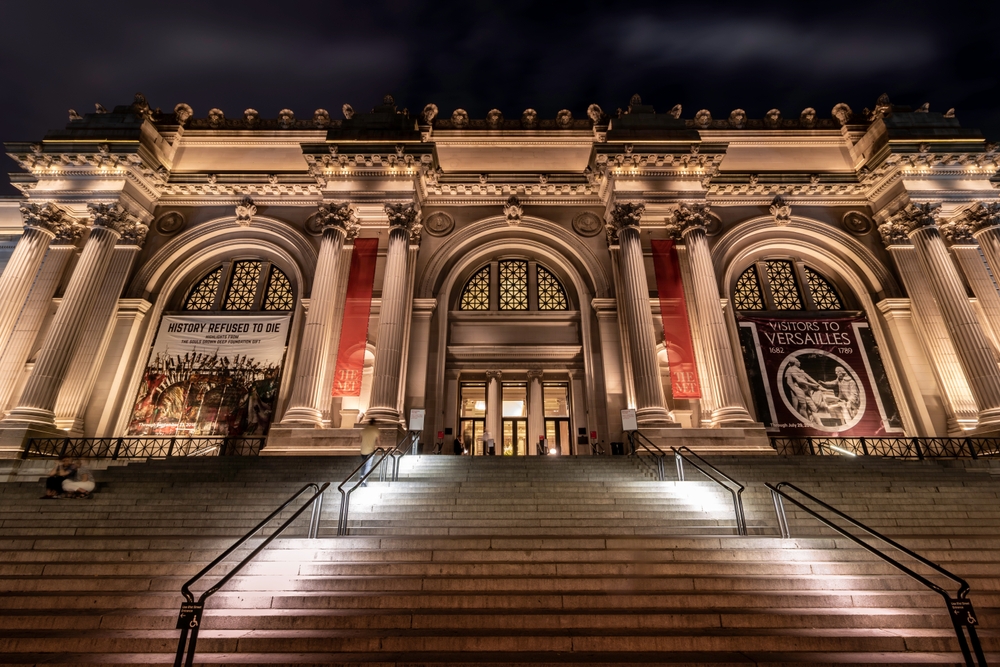
“Beauty will save the world.” With this declaration, Prince Myshkin in Fyodor Dostoevsky’s The Idiot affirms his belief in the triumph of the transcendent principles of truth, beauty, and goodness. Despite the ugliness too often seen in the world and the moral corruption that corrupts the minds and acts of men, the belief that beauty is a path to salvation persists. Yet we need not look farther than outside our windows at the ugliness on display in our modern buildings, where beauty and classical technique have been abandoned in favor of utility and cost efficiency. The modern West has become plagued by relativism, nihilism, and the rejection of tradition. The increasing disbelief in objective moral norms and the widespread acceptance of the futility of existence beg for the revival of virtue in individuals and communities. But first, we need an image of the divine—an image of the beautiful.
As man has slowly retreated from his proper heavenly end in pursuit of merely monetary or worldly alternatives, the presence of beauty reminds us that we are made for something far greater. Aristotle defines this end as “ευδαιμονία,” or happiness. St. Thomas Aquinas calls it “beatitudo,” or the knowing and loving of God. Avicenna calls it “sa’ada.” These philosophers, though from different societies and religious traditions, show that all men ultimately strive for the same end—fulfillment in accordance with the highest good of creation. Virtue, a habit that inclines one toward the good, is integral in achieving this goal. And beauty reminds us that the good can be made manifest.
In a world where objective values and morals are questioned and dismissed, it is easy to see how a disordered view of beauty arises. After all, if truth is not viewed as objective, neither is beauty, as the two are wedded. Classical principles of beauty—such as harmony, symmetry, and proportion, which reflect the proper order of the created world—have been abandoned. Society no longer defines beautiful things as “those which please when seen,” as Aquinas defined them to be.
The remedy to architecture’s ailment, however, lies in considering its cause. Beauty evokes virtue just as virtue inspires beauty. A revival of beauty in the world around us will entice the soul to pursue truth and goodness. Encountering beauty will draw the will and intellect toward the good. When immersed in an environment conducive to human flourishing, it is far easier for us all to persevere in choosing the good. Thus, the presence of beautiful architecture is the first step toward rebuilding virtue among men and communities.
But how can that be?
The answer is twofold. First, beauty matters. The greatest civilizations are both remembered and judged by their culture, literature, art, and architecture. These man-made manifestations of the beautiful are beautiful because they lift our souls into contemplation of the divine source of creation—an eternal source. The second reason rests upon the principle that beauty reflects the proper ordering of creation, and this is rendered visible in everything from a beautiful building to the just human soul to the very source of creation Himself.
We live in a culture afraid to speak the truth that Prince Myshkin professes. We’re afraid to make value judgments pertaining to beauty and goodness. We falsely treat both the ugly and the beautiful as morally neutral and thus equal. Nevertheless, this trend cannot persist forever. Human beings are drawn to beauty. This truth has been well understood since ancient times. In Plato’s Symposium, Diotima describes the ascent that must be made in order to understand what beauty is in its truest form. The journey begins with the contemplation of physical beauty and progresses to the beauty of souls, ideas, and all knowledge before arriving at the pure form of beauty itself. This progression speaks to the need to first reacquaint ourselves with physical beauty. Art, architecture, and persons alike can fulfill this; however, architecture holds a unique role in our world as it is difficult to ignore and easy to access. People do not need to go out of their way to admire its beauty—they only need to look up and reflect on what they encounter. Architecture cannot be ignored when it surrounds man, and man is almost compelled to be enveloped by it.
This ultimately speaks to the truth of human nature: We are made to flourish, not just survive. Flourishing does not consist of mere utilitarian ends. Thus, neither should our architecture. We have examples of edifices such as the grand basilicas that pepper Europe and the ancient ruins that have lasted from the classical era until modernity. What is characteristic of these structures is that they possess a transcendent quality. Modern architecture is often built as quickly and as efficiently as possible with little regard for its beauty. The cheapness of these constructs implies that they’re not meant to last. Modern society’s mindset is to create a space as quickly and cheaply as possible, use it to engage in a temporary endeavor, and then abandon the space when it fails to meet that end. Beauty is not factored in because it brings with it a higher cost and requires a fundamentally different worldview that is not solely focused on the here and now and useful.
This disregard for eternity mirrors man’s modern view of his own life. St. Peter’s Basilica is more than just the principal church for Roman Catholics; it also embodies an array of architectural masterpieces and artful details. Beautiful and functional architecture can and should coexist. This partnership between function and form to emphasize both purpose and beauty reflects most accurately the telos of more than just the building, but also that of the builders and the community. Furthermore, an architectural revival does not necessarily exclude modern style; modern architecture can and ought to be truly beautiful. Any number of stylistic influences can bring beauty back, so long as they move us to contemplate the Most High and the highest values we should all pursue in the hope of final union with our Creator. The Baroque flair of the Palace of Versailles, the Hungarian Parliament building’s Gothic elements, the Beaux Arts characteristics of the New York Public Library, and the Neoclassical features of the United States’ Capitol building all succeed in inspiring.
Genesis 2:15 reminds us of the responsibility God entrusted to us when He took man and “put him in the Garden of Eden to work it and take care of it.” It is inherent in human nature to maintain God’s proper order for the world and care for His creation. God created the Good and He created man in His image. His plan for the world is goodness and fulfillment through the beauty of creation—and the creation of beauty, a true reflection of the imago Dei. He entrusts to man the responsibility of stewardship over creation, a stewardship over beauty. What we need is beautiful-souled people throughout society, and especially virtuous architects who can lead the charge in bringing man back to the contemplation of beauty. This stewardship over beauty that the public will encounter will be what draws our culture back to seeing the beauty in our neighbors and in God.
Each generation is set the task of leaving behind a world just a little more beautiful, just a little more hopeful, and with more opportunities for prosperity and flourishing. What better way than to leave a physical reminder of what we are called to? While physical structures are just a glimpse of the beauty we are destined for, it is nonetheless the glimpse our society needs to restore a deep contemplation of virtue in ourselves and for our communities.