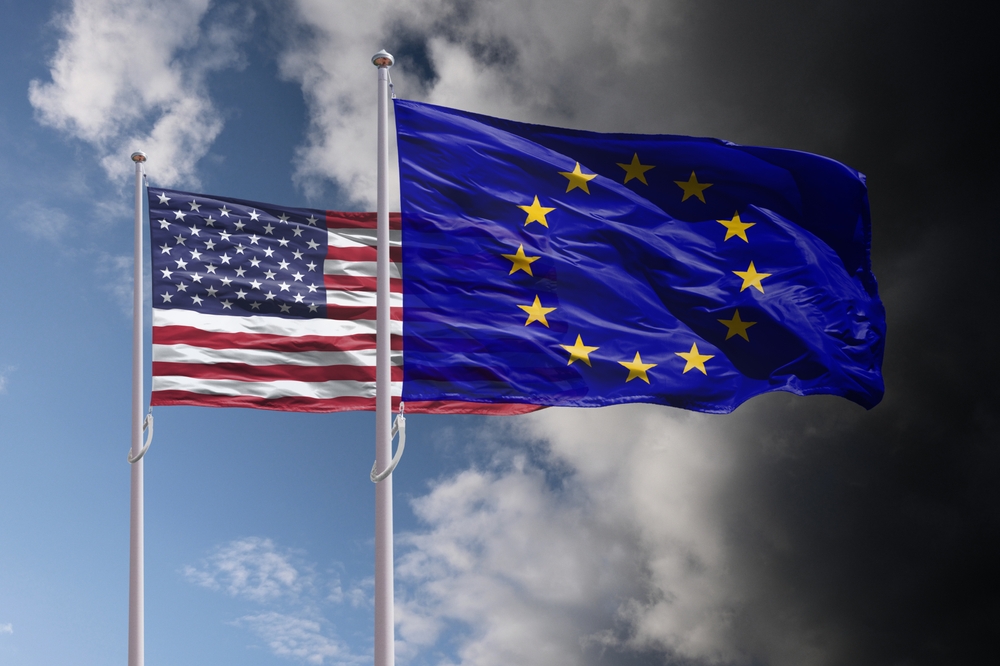
I come in peace—don’t shoot. I’m one of yours.
As a Spanish conservative committed to building a politically robust and intellectually vibrant movement across Europe, this has become my default opening line—sometimes stated outright, sometimes implied—in private meetings and public speeches abroad. It feels especially necessary when speaking to fellow conservatives in the United States.
That instinct found new relevance during a recent trip to America, where I participated in two major events: CPAC in Washington, D.C., and the Texas Policy Summit in Austin, organized by the formidable Texas Public Policy Foundation. These gatherings reminded me of both the power and paradoxes of American conservatism: bold, creative, unapologetically patriotic—and yet, at times, curiously detached from its oldest allies and cultural roots.
For European conservatives, the current moment poses a question of existential consequence: How do we engage a conservative America that is undergoing a profound redefinition of its global role, often in terms unfamiliar—even unsettling—to many of us?
The answer begins by recognizing that we do not stand on opposite sides of the world, but rather on opposite banks of the same river. Our shared traditions—faith, family, freedom—have formed a deep cultural kinship that predates modern political alliances. In that sense, America is not the New World but rather the most shining expression of the Old.
Yet this family resemblance has become harder to see. We European conservatives often feel like we are speaking a different language—not in terms of vocabulary, but in terms of political grammar. The American right, at its most assertive, speaks with revolutionary cadence; the European right, at its most authentic, is rooted in continuity, history, and custom. American conservatism is often future-oriented, while European conservatism is memory-bound.
That divergence came into sharper focus during conversations in Washington and Texas, where I repeatedly heard that Europe must “earn its place” in the eyes of a resurgent America. Some went further, suggesting that the continent must become “more attractive on the balance sheet” than other competing nations or rival blocs.
But if our partnership is reduced to a transactional calculation, we both lose. Because no matter how you frame the metrics—defense spending, trade flows, or diplomatic clout—Europe will struggle to “outbid” other rising powers. What we can offer instead is civilizational ballast: a common heritage, a shared moral vocabulary, and hard-won lessons from centuries of political trial and error.
None of this excuses Europe’s complacency. We must awaken from our slumber—economically, strategically, and morally. And let me be clear: Europe has been a free rider when it comes to defense spending and other matters, something that must be immediately corrected. We cannot ask America to treat us as equals if we continue to act like we’re not. But we must also be candid about the role America itself has played in shaping the European landscape today, for better and for worse.
Some of the ideas now tearing at the fabric of Western identity—radical individualism, identity politics, the technocratic suppression of tradition—were not born in Brussels. They were incubated in Silicon Valley, the Ivy League, and elite American institutions before being exported across the Atlantic. Woke ideology, among many other export goods, arrived in Europe with a “Made in the USA” label—often as a condition for market access or institutional partnership.
As many American conservatives now seek to reverse these trends at home, we welcome the renewed focus on family, virtue, and national renewal. But we also ask for solidarity as we try to do the same. We are clearing the same ideological rubble—just on a different side of the ocean.
We need policy alignment, certainly, but also cultural solidarity. The rediscovery of common roots can anchor a new kind of transatlantic conservatism—one that balances American dynamism with European temperance, and that pairs our respective strengths: your courage and confidence, our caution and continuity.
Allow me to end on a personal note. As a Spaniard, I am proud of my heritage. As a conservative, I am heartened by the energy of today’s American right. But as a European, I am also realistic. If forced to choose between my ideological affinities and the national interests of my country, I will choose the latter. And so will many of your allies on this continent.
So here is my modest proposal: Let us continue the conversation—not as buyers and sellers, but as brothers and sisters in the great experiment of Western civilization. We have heard you. We are taking notes. We are doing the work. But we ask only this: Do not mistake our differences for disloyalty. Do not open what we still consider friendly fire.
We come in peace. We are one of yours.